The IBM centennial kicked of today, with the publishing of this video 100x100, a hundred advances over 100 years, each one read by someone born in that year. Great stuff.
Best Customer Service Call Ever
I will hide the vendor's name to protect the innocent. However I have a recurring order with a vendor, which is great, up until they got rid of a few items. I tried to modify my order online, and I got an error that said I couldn't and to call the customer service number. Ok, fine, guess I need to use my cell minutes for something.
I explain the issue to the CS rep. He offers to reset my password. I explain that I can actually log in, but I just can't modify anything.
"Yeh, the website has been like that since I started. Honestly, I have no idea what IT gets paid to do, because I've asked them about that a bunch of times and it's still broken. Your best bet is to just call in your changes. I know it's less convenient, but we're available 24 hours."
I thanked him for his time, told him I'd call back later, and had a good laugh. I appreciate honestly like that.
Tips for giving effective presentations
Some quite good points from Physicist/Feminist:
The “What” vs. the “So What”: Doumont stressed the idea of getting across your message. He differentiated the message from the information. The information can be thought of as the “what”. The message is therefore the “so what”. One of the most useful things he said was to “maximize what the audience gets out of the presentation, not the information you put it.” I think it can be really tempting to put as much information into your presentation as possible, but it is more effective to parse out unnecessary information and concentrate on the “so what”, the motivation for your work. Your talks should always have a message.
You should read the full article, it has lots of great tips.
The point of maximizing for output not for input is key. My current method to try to get to that is start with a much larger slide deck, dumping in everything I find interesting about the topic. Then I start aggressively editing. Giving yourself time to edit is the key, because everyone's first draft leaves a lot to be desired.
Android Talk at the Poughkeepsie ACM
I didn't get home last night until 10:30, and sleep didn't find me until after 1am. All of this was because of a talk I gave at the Poughkeepsie ACM on my experience with Android Development with the Where is Io application.
Why the ACM, and not the LUG? That question got asked at dinner, as the ACM regulars are well aware that I run MHVLUG. There were a few reasons. The first of which is that we did an Android talk in May, and while my talk was substantially different, the concept would feel stale to me. We've got a 2 year no repeat policy on topics, which I think works out quite well. But I had this quite good talk that I really did want to do locally and not just for the folks in Harrisburg.
But something else happened over the course of the fall, which got me more excited about this talk. It occurred to me that mixing things up a little is always a good thing. MHVLUG is my familiar turf, and at this point I know the audience really well, so it's less of a lecture and more of a hangout with friends for me. I am definitely in my comfort zone there. ACM is new faces, new audience. I had spoken there previously, and while I knew a couple folks that come to LUG meetings are ACM regulars, it promised to be a mostly fresh crowd. Growth for me, and a chance to generate a bit of crossover between the groups. I advertised the talk to the LUG on the off chance that we'd get a few folks to come out.
The ACM does dinner first, meeting second (reverse of MHVLUG). I happened to show up at the Palace just as Ben and Tim (2 of the other MHVLUG officers) did. As we walked in we found the ACM table which was 7 folks, with an open spot for me. At +3 we kind of broke that assumption so wedged another table over. It turned out that wasn't the last table addition we'd need. By the time food was being ordered there were about 16 people at dinner. Bob Cotton, ACM president, turned to me at one point saying this was the most people they'd had in a while.
Gulp. At that point I realized an expectation was set, if no where else than in my head. This was going to be more of a draw than the ACM meetings typically got, which meant I felt an extra burden to not be wasting anyone's time. I knew the talk didn't suck, I'd given it before, and I'd refined it again, but live performance is what it is, and until you get swinging you never know.
Dinner ran late, which means we got to Marist late, and while I was expecting a few other faces than at dinner, people who said they'd be there, I wasn't entirely expecting 20 more faces. Neither were they. There was a chair scramble while I set up.
The talk went very well, one of my better performances. It clocked in at about 50 minutes, which seems to be my new norm, open questions for 30 minutes following, with stragglers there for another 40 to ask more questions. It had been one of the biggest draws in a while, and when people want to keep discussing the topic for a full hour after you ceded the floor, you know you stuck the landing. I still get quite an adrenaline rush after a solid presentation like that, which led to the whole issue in falling asleep.
Bill Collier told me at the end of the evening I'd be welcomed back to speak any time, and I'll definitely take him up on that.
Digital Familiars
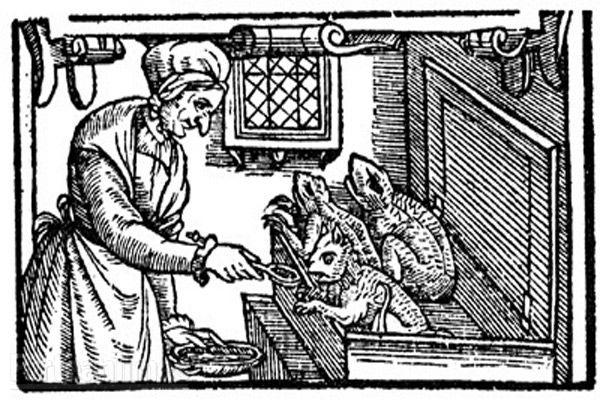
From the Wikipedia entry on Familiars:
In European folklore and folk-belief of the Mediaeval and Early Modern periods, familiar spirits, sometimes referred to simply as familiars, were supernatural entities that were believed to assist witches and cunning folk in their practice of magic.[1] According to the records of the time, they would appear in numerous guises, often as an animal, but also at times as a human or humanoid figure, and were described as "clearly defined, three-dimensional… forms, vivid with colour and animated with movement and sound" by those alleging to have come into contact with them, unlike later descriptions of ghosts with their "smoky, undefined form[s]".[2]
Due to their association with older forms of magic, in the twentieth century a number of magical practitioners, including adherents of the Neopagan religion of Wicca, have once more begun to utilise the concept. When they served witches, they were often thought to be malevolent, whilst when working for cunning-folk they were often thought of as benevolent, although there was some ambiguity in both cases. The former were often categorised as being demons, whilst the latter were more commonly thought of and described as being fairies.The main purpose of familiars is to serve the witch/young witch. The service the familiar would provide would be to protect the new witch coming into his/her new powers.[3]
The most astute comment that has been made to me about smartphones in the last year was by my friend Colby Miller up in Vermont over christmas. We were talking about our android devices and while holding out his HTC Incredible he said "you know what this is, it's a digital familiar". I had never thought of it in those terms, but it made perfect sense, and really captures the kind of relationships we form with these devices.
Familiar isn't apparently part of most people's vocabulary, as I found out last night. I guess all that AD&D in middle school came in useful after all.
The 4% Universe
I never thought I'd find another popular book about science that played on the same level as A Short History of Nearly Everything, but The 4% Universe seems to be on par. I'm only 3 chapters in, but the story is told in really wonderful and plays out like a great mystery novel. I'll do a full review when I finish, but I'm really loving this book so far.
Drupal Talk Roundup
A couple weeks ago I gave the first MHVLUG talk of the year on the work I've done with Drupal for the Poughkeepsie Farm Project, Mid-Hudson Astronomical Association, and MHVLUG. I think it went well, but it's sometimes hard to tell, especially because I've been trying out some new approaches on talks, so feedback comes in different ways.
When I was building the Android presentation for CPOSC, I realized I was building a generic Android tutorial, and I stopped myself. Why would anyone want to hear me give that presentation? You can get that all over the internets, on the youtubes and vimeos of the world. So, I thought long and hard about what I could uniquely bring to the table. The answer was pretty simple, talk about the things that I racked my brain on, in the context that I ran into them when building my application.
This drupal talk was much the same. Two days before the talk, while doing a dry run at home, I realized that I had a tutorial that was better covered by the internets. So, I started over, and edited heavily, and managed to produce a personal narrative of working with the PFP that showed the nuts and bolts of Drupal along the way. It was a much better presentation. It also made it easier to put a call for action in the presentation, for people to get involved with local non profits.
Because this was a narrative, and not a tutorial, the audience interaction is very different. People stop and ask clarification during a tutorial, but questions during a story are often considered rude. This led to a very distinct boundary between talk, running just about an hour, and questions, which carried for 30 minutes after that. Without questions during the talk, it's a little harder to tell if people are engaged. I do have a vivid image in my head of looking out out on the audience and even the laptop folks were all eyes up and watching, so I think I succeeded there. The 30 minutes of questions, coming from at least 8 different people, helped reinforce that.
I also made a few mechanical changes to the presentation in Open Office, which others might find interesting. I've moved to using Fade Smoothly (Fast) for slide transitions, and Fade In (Fast) for element animation. Getting rid of the hard appear makes the whole thing feel more fluid, and as long as it's fast, it doesn't get in the way.
I also realized that when you put up a slide you feel like it should get your time, but sometimes there is nothing really to add. I had a brief walk through of drupal installation. During dry run I realized I spent way too much time talking about slides with relatively little talk worthly content. To keep myself honest during the talk I made those slides automatically advance after 5 or 10 seconds (depending on complexity). That meant I got all of that on screen, but capped it to 40 seconds, and didn't find myself saying something like "what more can I say about this slide".
Overall I think things went quite well, and am now looking forward to the ACM talk tomorrow night.
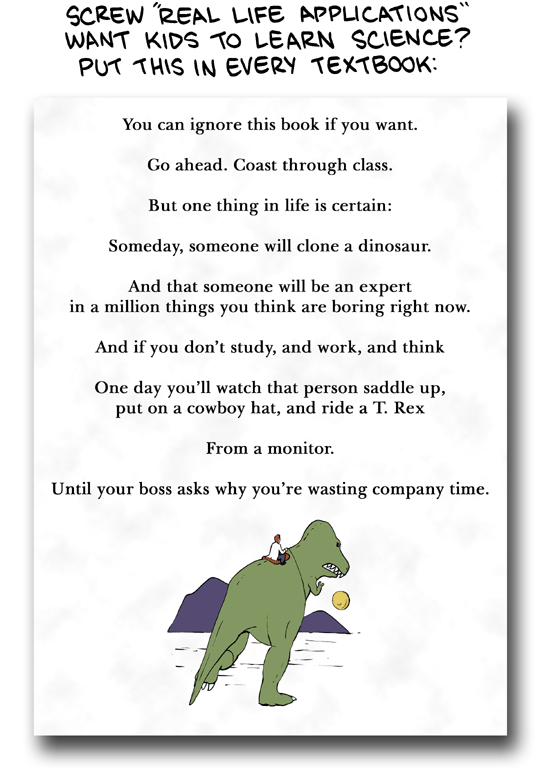
Comic: Get kids to learn science
Making the internet a better place
When it comes to the Internet there is something we've all done that's bad for us. You know you've done it. You've probably done it when people weren't watching, when you were all alone. You know what I'm talking about: reading comments on websites.
You find yourself involved in an article that you may or may not agree with, but you find quite interesting. Something the author spent some time on, weighed different wording, and tried to create a coherent statement. They might even have provided helpful links and footnotes to let you learn more, or to back up their thoughts. You are so enthralled that you keep reading at that level of interest as the article comes to an end. You want more, so you keep reading.
Wait, what was that, when did the article reference nazis? What's this? Conspiracy of big pharma? but I thought this article was about nice places to go picnicing? The author is a free mason? When the hell did Apple's new product become relevant to this article? Oh ... no ... I'm lost in a see of comments written by crazy people. Help me I'm getting dumber by the minute!
Well, there is a solution. There is this very nice addon for Firefox called CommentBlocker. Install it and now the internet immediately becomes a better place. Average IQ of your reading experience goes up by at least 20 points, and your overall satisfaction interacting with the web goes way up. As a bonus your faith in humanity goes up a couple of points as the loud and angry trolls, ones that aren't willing to put their name on their statements, no longer get to dominate the conversation. If there is a site where the comments are of high value, or you just need a little crazy in the afternoon to keep you awake, in one click it will return the comments, but for that site only.
Take back the web, don't feed the trolls, use CommentBlocker.
Fahnestock Winter Park in the Poughkeepsie Journal
There is a good write up today on the Fahnestock Winter Park (alternate link on NY outdoors blog), including some expansion plans. I love the idea of making a groomed trail around Stillwater Pond, as that would give another couple of miles on the wooded side of the park, which is my favorite. Fahnestock Winter Park is currently fully open, including the Lake Trail, and definitely something you should check out if you like x-country skiing. I was just there yesterday, and the snow is quite good.