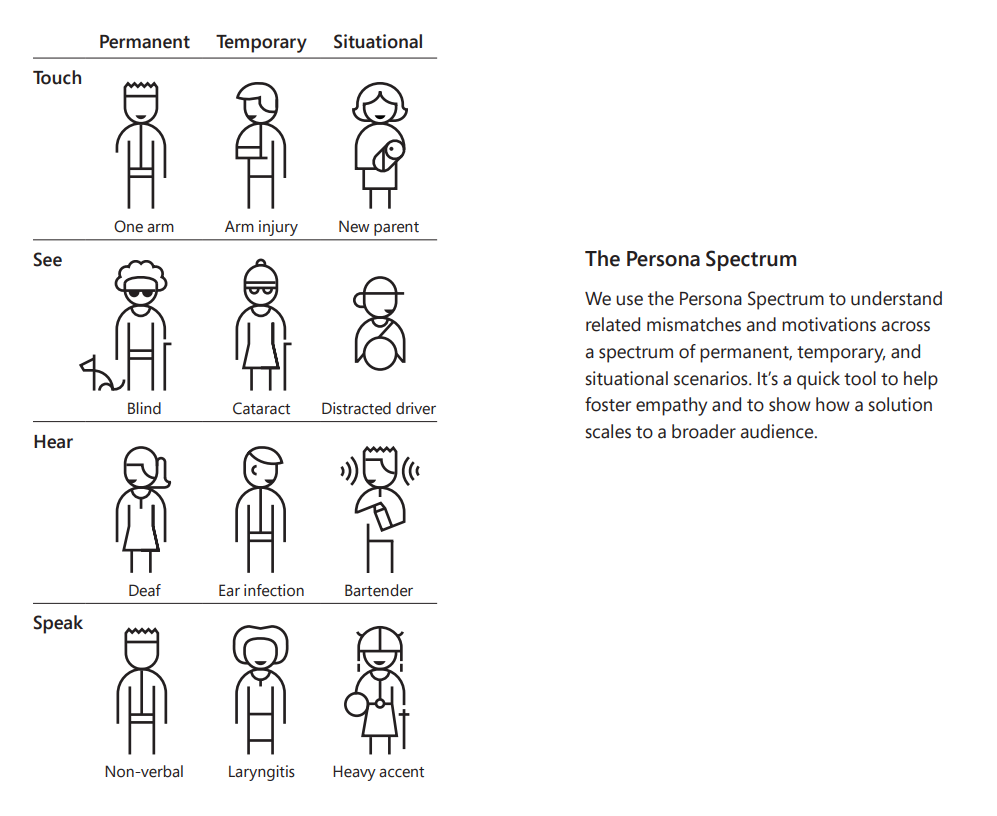
[caption id="" align="aligncenter" width="540" caption="IBM Poughkeepsie's newest addition"][/caption] When I returned to IBM Poughkeepsie after Christmas Vacation, I was startled to see this as I pulled into the parking lot. I'm not sure if they are meant to scare away the geese, the deer, or the unsuspecting programmer. Regardless, they are kind of creepy. [caption id="" align="aligncenter" width="540" caption="IBM programmer worships robot Canine overlord"][/caption]
Maybe it shouldn't be Computer Science
I had an interesting conversation at lunch yesterday when I met a CS professor at a local college. He's got nearly 15 years industry experience, in addition to a decade being in academia, so exposure on both sides of the fence. During the course of the conversation I asked him what triggered the transition. His response was that he didn't really enjoy programming. There's nothing wrong with that answer. I'm always jarred by it when I hear it from folks, because programming is what I love. But everyone's different, an there is a lot more to computer science than just programming. Over the course of the day that statement kept coming back to me, and I realized I'd heard it a lot of times in the past. The vast majority of CS profs I had during my graduate degree were in the same camp. Friends that are in CS academia, tend to lean the same way. Art and music programs in liberal arts schools are a combination of practitioners and theorists, attempting to build a well rounded art student on both fronts. So why is CS still mostly theory in these environments? The theory parts of CS wouldn't have been my thing as an undergraduate either. Much like calculus being pretty boring in high school, but becoming down right compelling in my college physics classes when it was a tool to solve a problem, and not just theory that stood on it's own. Without a body of work that's tangible, the theory is much less relevant. So maybe it's time to call it something other than Computer Science. Software Engineering has the no no of the word Engineering, which doesn't go over well at liberal arts schools. Apparently, Informatics is the monkier in much of Europe, and given the rise of data analysis, that's probably as good an idea as anything else.
Brother HL-4150 vs. Linux
I love having a duplexing color laser printer at home, and thanks to my friend John for the recommendation on the Brother HL-4150. However, in the last few months I found that print quality was way out of whack from Linux, last night I found the fix. What was most curious was that if I printed from Adobe Acrobat, everything was good, but any other program in the system, and the output was jaggy, and the colors were faded. The fix was simple, but took a little while to find. Make the print url: lpd://(Your printer's IP address)/binary_p1 Life is good again, output looks great, and I don't have to jump through Adobe hoops. And if you are looking for an affordable color home laser printer, I'd definitely recommend this one.
Aphorism: When things go wrong
The major difference between a thing that might go wrong and a thing that cannot possibly go wrong is that when a thing that cannot possibly go wrong goes wrong it usually turns out to be impossible to get at or repair. -Douglas Adams, Mostly Harmless
When it comes to software and the word impossible, I do not think it means what you think it means.
Sunrise at Kennedy Space Center
Building an El Wire Sign
After both of our Astronomy outreach events at Vassar I've gotten comments from folks that we should have a sign out at the main street to direct people into the event (which also might bring in folks that didn't know about it.) This struck me as a great chance to look into using EL Wire. EL Wire is what they used in the new Tron movie to make the distinctive look on people's clothing. In the old tron the glow was post processing, in the new one it was actually there. EL Wire only glows blue/green, but through the use of colored sheaths you can get different hues. EL Wire runs at 100 Volts, 1000 Hhz, though with such little amperage that you can make an inverter that supports about 3m of wire that will run off 2 AA batteries. So I bought some EL Wire in "red" to see about making a sign. I got 2 9 ft lengths (which turned out to be a good guess on length) that already had inverters on them. With some scotch and electrical tape I did a quick test to see if I could write out STAR PARTY with an arrow. I considered the test successful, so I decided the next step was to paint the plywood black, and instead of using masking, actually drill through the plywood to make the lines.
It turns out that there is enough friction to hold the straight lines without any worries, but the loops on the Rs, P, and S need some help, so scotch tape to the rescue there just to hold it in place. The final result with the lights off an illuminated: It's not so much red as orange, but as an indicator sign this should work out well for our events. It also made for a great little weekend project.
Celebrating Female Engineers
Wired magazine has not been know for women on their covers, and when they are, they were somewhat problematic. At least this month, things are different, and they chose a really spectacular female engineer for their cover. Limor is the creator of Adafruit Industries, and online store / community for DIY open source electronics. She and her team specifically work on simplifying the electronic designs so they are more approachable by the average person with a soldering iron. She's been one of the big proponents and drivers of the current Arduino craze, which is vastly expanding the ranks of the people that can make basic interactive electronics. I love the callback to Rosie the Riveter, for those gentle readers outside the US.
Kindle Interupted
I broke down and bought myself a Kindle this past week. I will say that I am definitely in like with the device, but not really in love with it yet. The major reason for that is because in the kindle I can see so much more potential, which Amazon clearly has no interest in. Sadly, their main competitor, the Nook, has fully abandoned e-ink for the glossy shiney promiss of interactive CD-ROM... oh, sorry, wrong decade. I think they are now calling it interactive magazines. E-ink is beautiful. Just beautiful. It is a pleasure to read, creates no eye strain, it's paper, but better. The missing potential is around how completely locked down development is, and looks like forever will be, on the Kindle. I recently tried to get access to the KDK to play around with astronomy code on the Kindle. E-ink represents a unique value in astronomy, because it is a dynamic screen that generates no light. I've got 15 lbs of books that I take to every star part (and another 15lbs I leave at home) to look up targets, facts and figures, when in the field. Replacing that with a Kindle would be amazing. Having Where Is Io run on the kindle would just kick some serious butt. But that's not in the cards. While this time I actually did get a response from the KDK folks, the tone was clear. They don't want a homebrew market on the kindle, they only are going to let folks in with a product plan in place. Kindle active content is going to be extremely limited because of this, which I think is Amazon's intent. Given that they are the ones paying for the wispernet cellular connection in every device, they've got some incentive to keep very tight control on what people can do. I get that, but as an open source developer, I still don't like it. It does sadden me, because I can see so much more potential for this device. Maybe Amazon will have a change of heart in the future. For now I'll just have to live with this being a really great reader, and possibly play with some custom authoring myself.
IBM Watson on NOVA
NOVA just aired their special on Watson, the computer that is going to compete on the IBM Jeopardy challenge, and it's really good. Even my wife, who often waves that kind of thing off as "boring" was sucked in and glued to her seat for the entire program. They do a really good job of explaining some of the basics of how Watson works, and why this is incredibly hard to do. NOVA is current streaming this episode online, so you can watch it on your computer if you missed it when it aired. I'm really looking forward to the 3 nights of matches (Feb 14 - 16). Match 1 will span nights 1 & 2, presumably to explain some of what's going on to the audience, and night 3 will be the second match in it's entirety. I know of events at SUNY New Paltz (where I'll be headed), and Bard College, and I assume many other locations around here, given that Watson itself lives about 50 minutes south of here at the Yorktown Heights Research Facility.
3rd trick on dd-wrt on FIOS
As soon as I went to work the home network dropped off the internet, wouldn't you know it. It turns out that was the time the old lease ran out, and it wanted my router to ask for it again. As I'd configured it to static to deal with their lease issue, no such luck. Fixing it when I got home taught me another lesson, it's actually really important to clone the MAC address as well of the old router. With the original MAC address in place I couldn't get a DHCP lease. With a clone of the FIOS router, all was good.